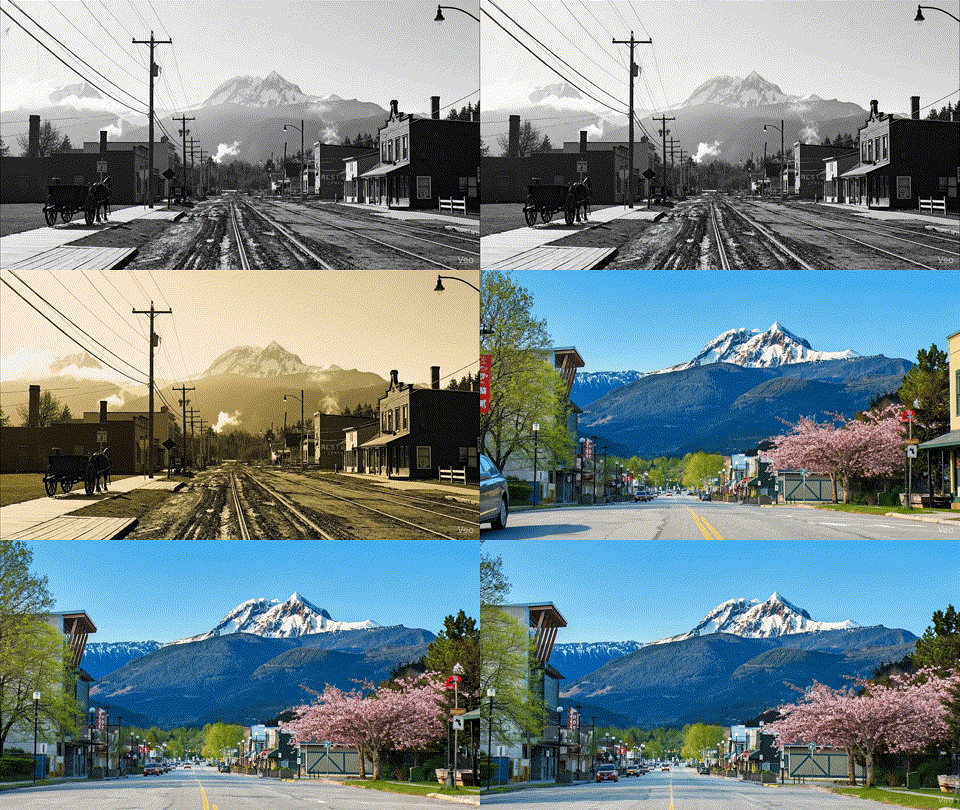
If you stand at the south end of Cleveland Avenue today, you’ll see one of the most iconic views in Squamish — a clean stretch of road framed by colourful storefronts, blossoming trees, and Mount Garibaldi rising like a sentinel at the end of the street. But rewind nearly a century, and that same view looked very different: a muddy, plank-lined road, a horse-drawn wagon, and the faint hum of a logging town finding its footing.
The Early Artery of Squamish
The year was around 1930 when Bun Yarwood, one of Squamish’s early photographers, captured an image of Cleveland Avenue looking north. In that photo, the town’s main street was still unpaved, flanked by telegraph poles and wooden sidewalks. A horse-drawn carriage sat to one side, and the Newport Restaurant sign marked one of the few businesses standing proud in a town where most buildings were still made of wood.
Cleveland Avenue took its name from E.A. Cleveland, a provincial land surveyor who mapped out the early Squamish subdivision in 1912. His grid of streets became the foundation of downtown, anchoring what would later grow into a lively commercial and cultural core. For residents in the 1930s, Cleveland Avenue wasn’t just a road — it was a meeting place, a supply route, and a symbol of connection between the people, the river, and the mountains.
A Street Shaped by Industry and Community
Squamish’s early years were powered by logging, rail, and grit. The Mamquam River and Squamish Estuary brought workers, timber, and trade, while the Pacific Great Eastern Railway — later BC Rail — tied the growing town to the rest of the province. Cleveland Avenue quickly became the centre of it all. General stores, cafés, and repair shops lined the street, serving loggers, families, and travellers heading north.
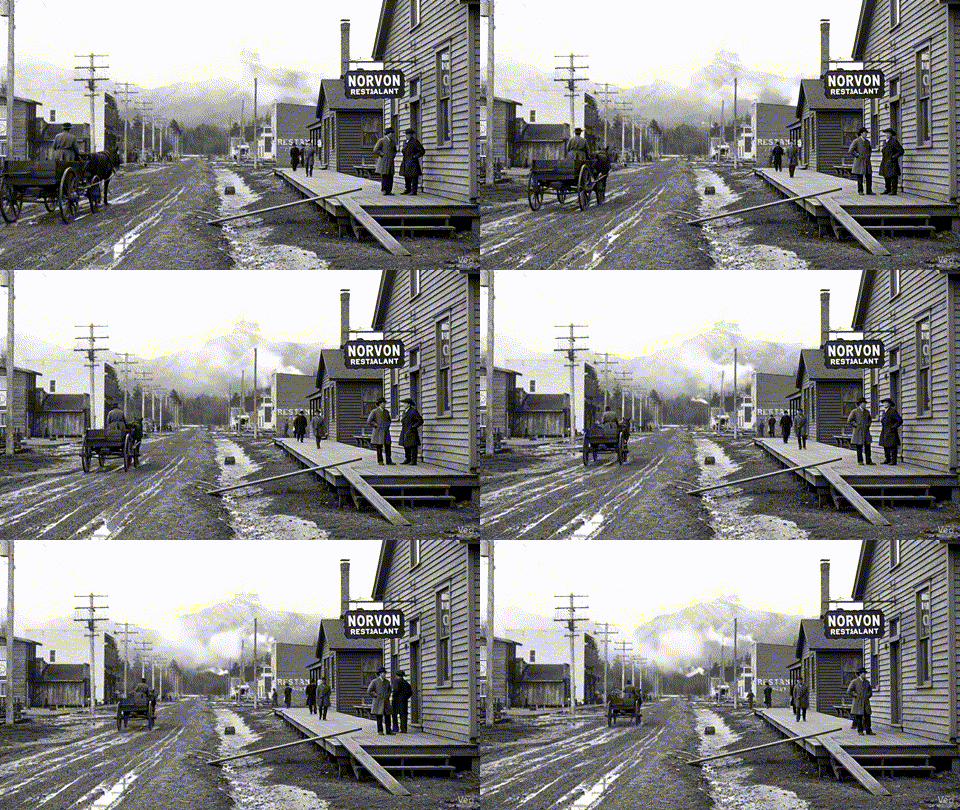
By the mid-20th century, cars replaced horses, and logging trucks began rumbling down the same route. Floods occasionally swept through, leaving behind silt and stories. But each time, the community rebuilt. The avenue was paved, sidewalks widened, and lampposts installed. Cleveland became the backdrop for celebrations, May Day parades, and weekend strolls — a thread of continuity running through a changing town.
Downtown Today: Where Past Meets Present
Fast-forward to the present, and the transformation is striking. The modern photograph of Cleveland Avenue shows a lively downtown lined with shops, restaurants, and art spaces — all set against the breathtaking backdrop of Mount Garibaldi (Nch’ḵay̓). The same mountains that loomed over the muddy street in 1930 now stand behind a thriving hub filled with the hum of espresso machines, local laughter, and the rhythm of everyday life.
Cleveland today is home to a blend of long-standing local businesses and new creative ventures. From weekend farmers’ markets to art walks, it’s the heart of community gatherings. And while the architecture has changed, the spirit of the street remains remarkably familiar — a place where people come together, whether for coffee, conversation, or celebration.
A Street with Deep Roots
Cleveland Avenue also reminds us that every modern street carries the memory of those who came before. Before it was paved, before it was mapped, this land was — and remains — the unceded, traditional territory of the Sḵwx̱wú7mesh Úxwumixw (Squamish Nation). The avenue’s growth, from wooden sidewalks to concrete curbs, exists within a landscape shaped by generations of stewardship and connection to the land.
Reflections on Change
When you compare the two photographs — Bun Yarwood’s 1930s image and the modern view of Cleveland lined with cherry blossoms — you see more than urban progress. You see the resilience of a community that has adapted without losing its heart. The street has witnessed floods, fires, booms, and rebuilds, yet it continues to serve as Squamish’s meeting place between mountain and sea.
Cleveland Avenue tells a simple but powerful story: how a small town carved its path through mud and history to become one of British Columbia’s most dynamic communities. Each new storefront, mural, and festival adds another layer to that story — one that still begins, as it always has, with the view north toward the mountains.